
ABS
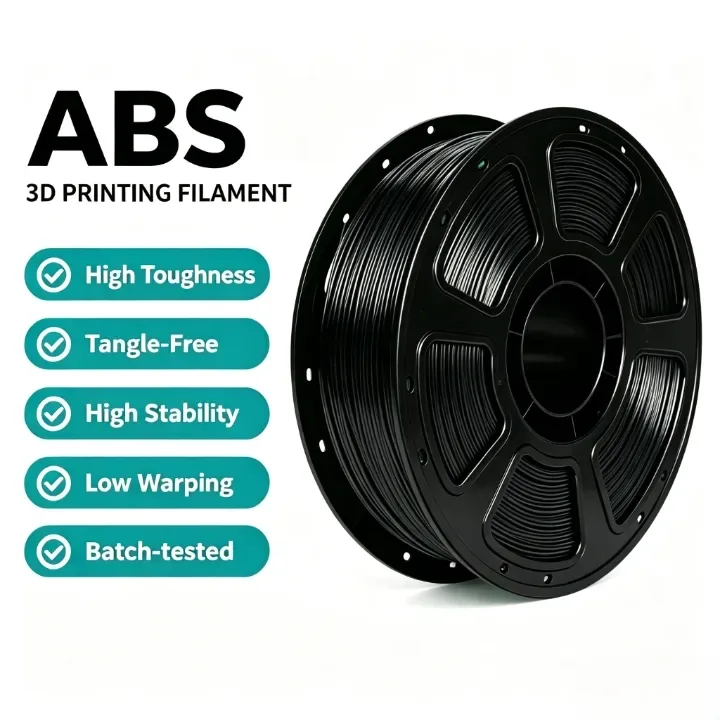
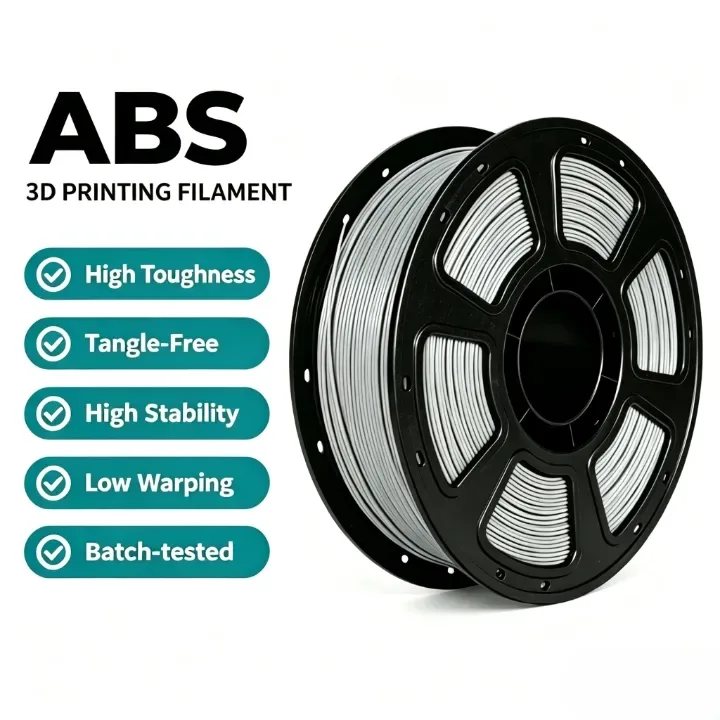
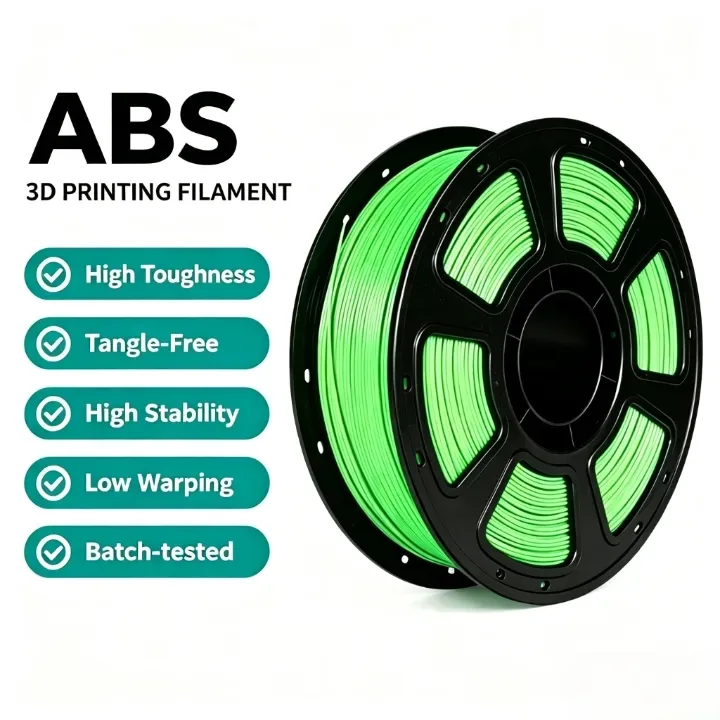
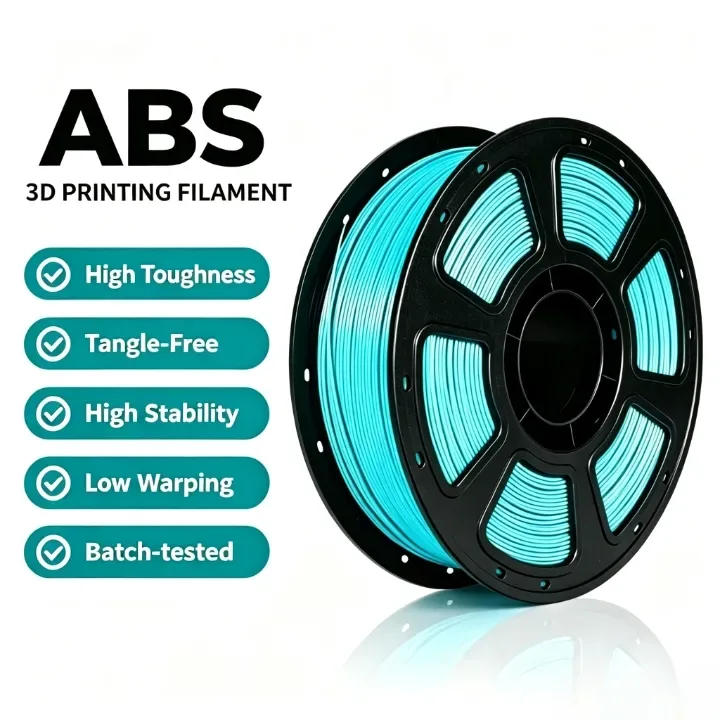
ABS is the material for parts that live in the real world: it holds its shape in a hot car, machines cleanly, and can be sanded, primed, painted or vapour-smoothed with acetone. It needs an enclosed printer and a heated bed around 80–100°C, but the payoff is a tough, temperature-resistant part. 4 colors on 1kg spools at 1.75mm ±0.02mm. Common uses: automotive trim, enclosures and functional housings.
Showing all 4 results
Frequently Asked Questions
What is the MOQ for ABS filament?
Stock catalogue colors start from 50–100 kg, and paid sample orders (1–10 kg, mixed spools) have no minimum. Custom Pantone/RAL colors start around 200–500 kg per color — the full breakdown is in our filament MOQ guide.
Can I order samples before bulk?
Yes. Paid sample orders ship in 1–5 days and come from the same production line and packaging as bulk goods, with the batch QC record attached. See our sample order playbook for how to run one.
Do you offer OEM / private-label packaging?
Yes — we can print your logo on spools, bags and cartons, and support custom formulation for larger programs. Typical private-label programs start around 1,000 kg; see the OEM / private-label guide for details.
How long is the lead time?
Stock colors ship in 3–7 days; custom Pantone/RAL colors take 14–25 days including color matching. Goods are packed in individual vacuum-sealed bags and export cartons, shipped by sea or air freight.
Is ABS heat resistant?
Yes — ABS keeps its shape well above the limits of PLA, which is why it is used for automotive interiors, parts near motors and other hot environments. Print at 220–250 °C with an 80–100 °C heated bed.
How do I avoid warping when printing ABS?
Use a heated bed at 80–100 °C, keep the printer away from drafts or use an enclosure, improve first-layer adhesion with glue stick or ABS slurry, and keep the cooling fan off or low for the first layers.